
Distributed Leadership
The dissolving of power allows contextual leadership to emerge

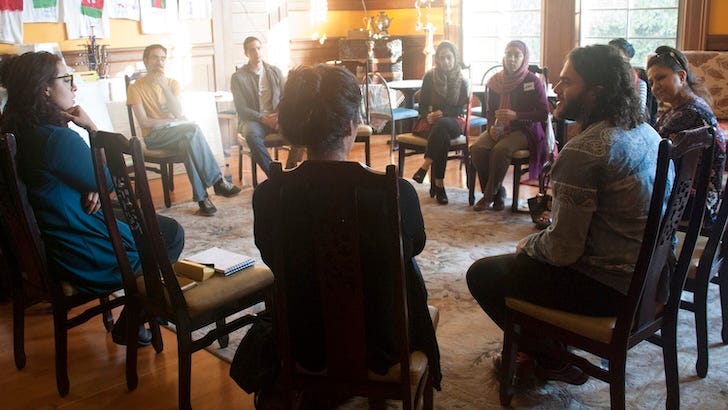
A young man ran and told Moses, “Eldad and Medad are prophesying in the camp.” Joshua son of Nun, who had been Moses’ aide since youth, spoke up and said, “Moses, my lord, stop them!” But Moses replied, “Are you jealous for my sake? I wish that all the Lord’s people were prophets and that the Lord would put his Spirit on them!”
— Numbers 11:27-29
Moses is tired: worn down by the persistent learned-helplessness, low-level murmurings, complaints and loud vocal discontent of the people he is tasked with leading. In response to Moses’ despair, God, in His kindness has momentarily held back some of the spirit of prophesy from Moses and distributed the spirit amongst seventy elders, who collectively participate in the burden of leadership with Moses. This is a one-time event, probably consisting in a show of ecstatic behaviour, a display of priestly solidarity.1
After it ends there are two men, Eldad and Medad, who leave the tent of sanctity and continue to prophesy in the midst of the Israelite camp, apparently without continued blessing from either Moses or God.2 This is what upsets Joshua. Such behaviour in public may rile people up, and new ideas may threaten Moses’ designated leadership.
Moses’ response to this situation is surprising: would God that all the Lord’s people were prophets, and that the Lord would put his spirit upon them! In other words, let leadership be distributed among the people, and not be consolidated in a single place, with a single person. The preceding episodes3 indicate that Moses is suffering under the weight of leadership and wishes for relief, but perhaps Moses also sees the folly of the one-leader model, and welcomes the idea that leadership could be distributed, the burden lightened and the wisdom multiplied. In this sense, Moses has an enlightened view.
The Corporate Context
In the corporate world today we put great stock in the single-leader model, holding individuals up as heroes, and often even as saviours. Corporations have, of course, their own murmurings of discontent. While we praise our leader one day, we complain bitterly the next. What we hear described in the book of Numbers is very familiar to those of us who work in the corporate world. It’s all there, the discontent, the resentment, the rising up and taking down of leaders, and as we see in a subsequent episode of this story4 the scheming to get our own share of the power and the glory. In 3,500 years we haven’t learnt much, and continue to play out the same patterns of power, with, inevitably, the same results. The corporate world might benefit from a few rebel prophets, and from a leader like Moses who welcomes the dissenting voice.
But with the advent of agile and other self-managed ways of working these past 2-3 decades, we can ask: What kind of a leader are you? One that holds on to power or one who seeks to distribute it, even dissolve it altogether—to step back, to invite others into leadership. The future of our organisations depends on engagement. Workers are only engaged when they have autonomy over their own work, and can lead themselves, their peers, and even their managers and directors towards collaborative solutions for complex problems. If you cannot trust the people you hire, the fault lies entirely with you, not with them. Effective leaders hire people better than themselves at doing the work, and then they let go. They trust. Leadership happens as and when it needs to, and is usually much lighter than we imagine it needs to be.